Rooted in Prineville, Growing Hope for Others
The name Ginevra means juniper, a fitting name for a woman whose life has become deeply rooted in Oregon’s high desert. Two years ago, she and her life partner, Paul Schuback, a violin and cello maker, left the Willamette Valley and settled in Prineville. What began as a return to family history soon became something much more.
Barnes Butte, one of Prineville’s most recognizable landmarks, bears Ginevra’s maiden name and that of her great-great-grandfather. Drawn by those family roots, she arrived delighted to reconnect with her heritage. She fell in love with the wide-open skies and the welcoming spirit of the community. She met extended family and welcomed a circle of friends.
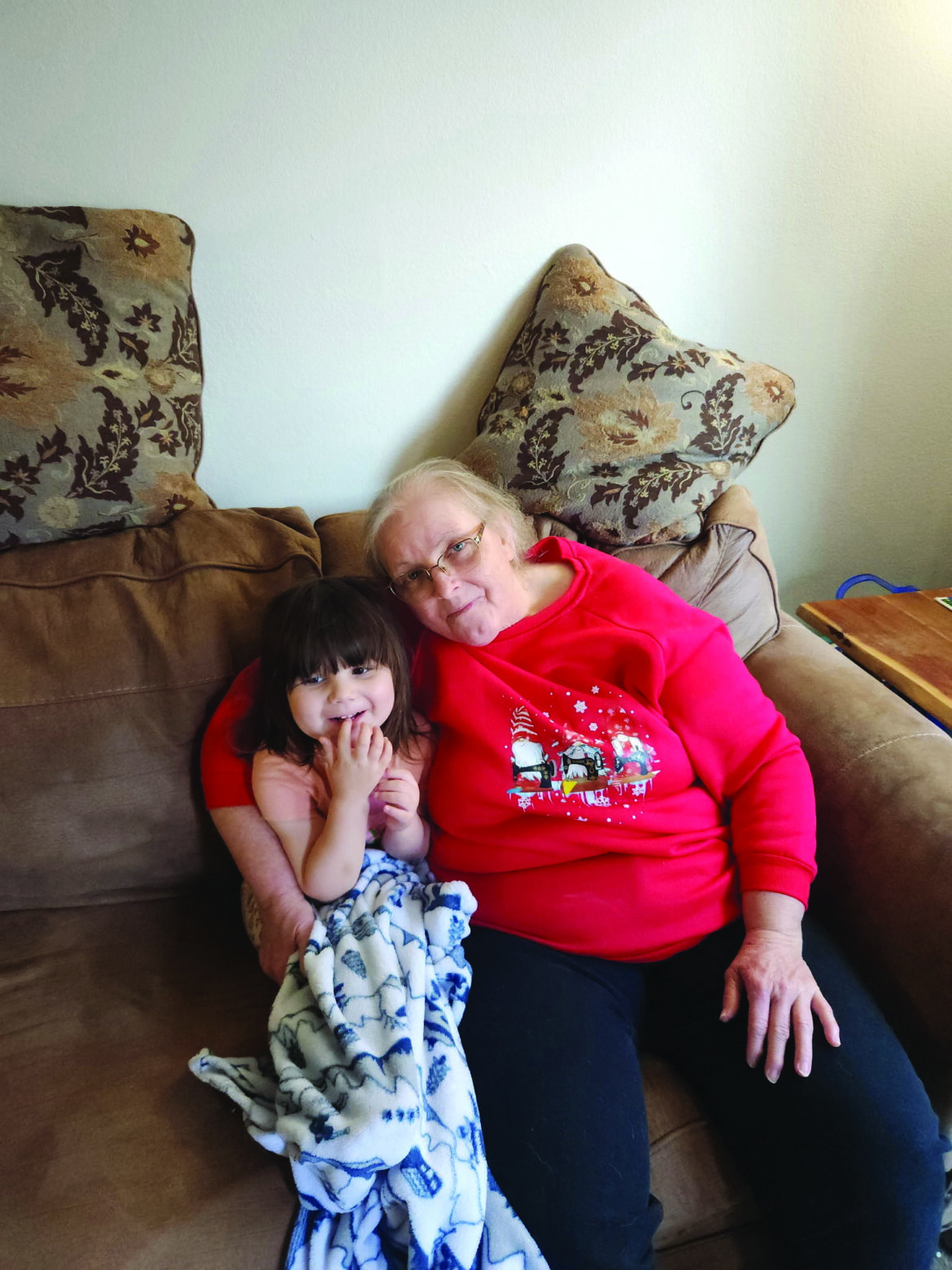
Long before cancer entered her life, Ginevra found a sense of belonging through her Schuback and Barnes families and shares great love with her grandchildren. After moving to Prineville, she found even more connections through a community event called, “Time of Hope, a local organization supporting cancer survivors and their families. Looking back, she considers that community of people a gift – one that would become invaluable when life unexpectedly changed.
Professionally, Ginevra’s path has been anything but ordinary. She worked as a talent agent in Hollywood, owned and operated a Jewish bakery in Tarzana, CA for ten years, and eventually earned a Master’s Degree to then dedicate her career to helping others discover opportunities and overcome challenges. Those varied chapters, along with working in organizational management in healthcare systems, shaped her ability to advocate, connect people, and navigate complex systems – skills she never imagined she would one day need for herself.
Like countless women, Ginevra believed she was doing everything right. She faithfully attended her annual mammograms, trusting the healthcare system to identify problems before they became serious. Each year she was told she had dense breast tissue, and each year she asked her providers what else she should know or do. No one suggested further testing like an MRI to see if those dense breasts were hiding growths or tumors.
Then, in March of 2026, her world shifted. Following the death of her beloved brother, Ginevra began experiencing persistent pain in her thigh and back. Provided physical therapy, she attended her second session only to experience an audible pop in her rib cage. From a subsequent x-Ray, a two-inch lytic lesion was discovered on her rib. Further testing revealed the devastating diagnosis: Stage IV Metastatic breast cancer, with too many lesions to count across her entire skeleton.
Even during this tumultuous time of uncertainty, Ginevra found a new way to frame her journey. At a cancer forum, she met another survivor who described living with cancer as a “health adventure.” Rather than allowing her fear to define every day, Ginevra embraced a balanced perspective – ups and downs, peaks and valleys. It didn’t minimize the seriousness of her diagnosis – it gave her purpose.
Her treatment included significant radiation therapy to her hips, spine and thighs and now she manages her systemic therapy with two medications and a monthly injection. Like many cancer therapies, the treatments affect her immune system and require ongoing monitoring. But alongside managing her own health, Ginevra discovered another calling.
She realized that if someone had fully explained that dense breasts can hide tumors or malignancies – and encouraged her to seek additional screening – her cancer might have been detected much earlier.
Instead of dwelling on what could have been, she chose to focus on living life to its fullest and doing what she could for others with dense breast tissue.
Ginevra launched a grassroots awareness campaign, creating a Facebook page, building an email network and writing a simple, easy-to-understand letter that helps women advocate for themselves during medical appointments. Her message is straightforward: ask questions, understand your breast density, and know that additional screening is available.
Her efforts have already reached over 600 women. At least five women pursued additional testing because of her outreach, and two of those required biopsies – powerful reminders that awareness can save lives. Her advocacy recently connected her with Pink Lemonade Project.
Ginevra believes that patients deserve not only compassionate care, but also the knowledge and confidence to advocate for themselves. Oregon’s dense breast legislation highlights the importance of educating women about their screening options in addition to mammography. With declining breast cancer screening rates across the Northwest, the need for stronger public awareness around breast health has never been more important.
She envisions a future where every woman understands her breast density, knows her rights, asks informed questions and feels empowered to seek additional screening when a mammogram is returned stating one has “dense breasts.” There are many opportunities to strengthen patient education, improve health literacy, support legislative efforts and expand advocacy throughout Oregon and beyond.
For Ginevra, advocacy has become a natural extension of her own journey.
Her story began with family roots that brought her to Prineville. It grew through the connections with extended family and friends and the hope she found in her community, strengthened by a belief shared across many traditions to be good and to do good. Today, that belief is reflected in every woman she encourages, every conversation she starts, and every life that may be changed because someone chose to ask one more question.
Ginevra cannot change her own diagnosis. But she is determined to change what happens for the next woman. In doing so, she is proving that even in the face of metastatic breast cancer, hope can still take root – and from the high desert in Prineville, it can grow far beyond the horizon.