

Tiana’s Story – Nature and Loved Ones Are Therapeutic
For most of her life, Tiana chased water in all its forms. She spent winters teaching skiing and snowboarding, and summers guiding rafts down rivers across Washington, Utah, and beyond. “I made my life out of coaching and being an outdoor educator,” she said. “I loved working on the rivers and up at the mountain—just chasing the water in whatever form.”
That seasonal lifestyle gave her community in many places. She had friends in ski towns and river towns, in mountain cabins and desert canyons. “It was really nice,” she said. “I’ve gotten to meet a lot of people, and I have community in a few different areas.”
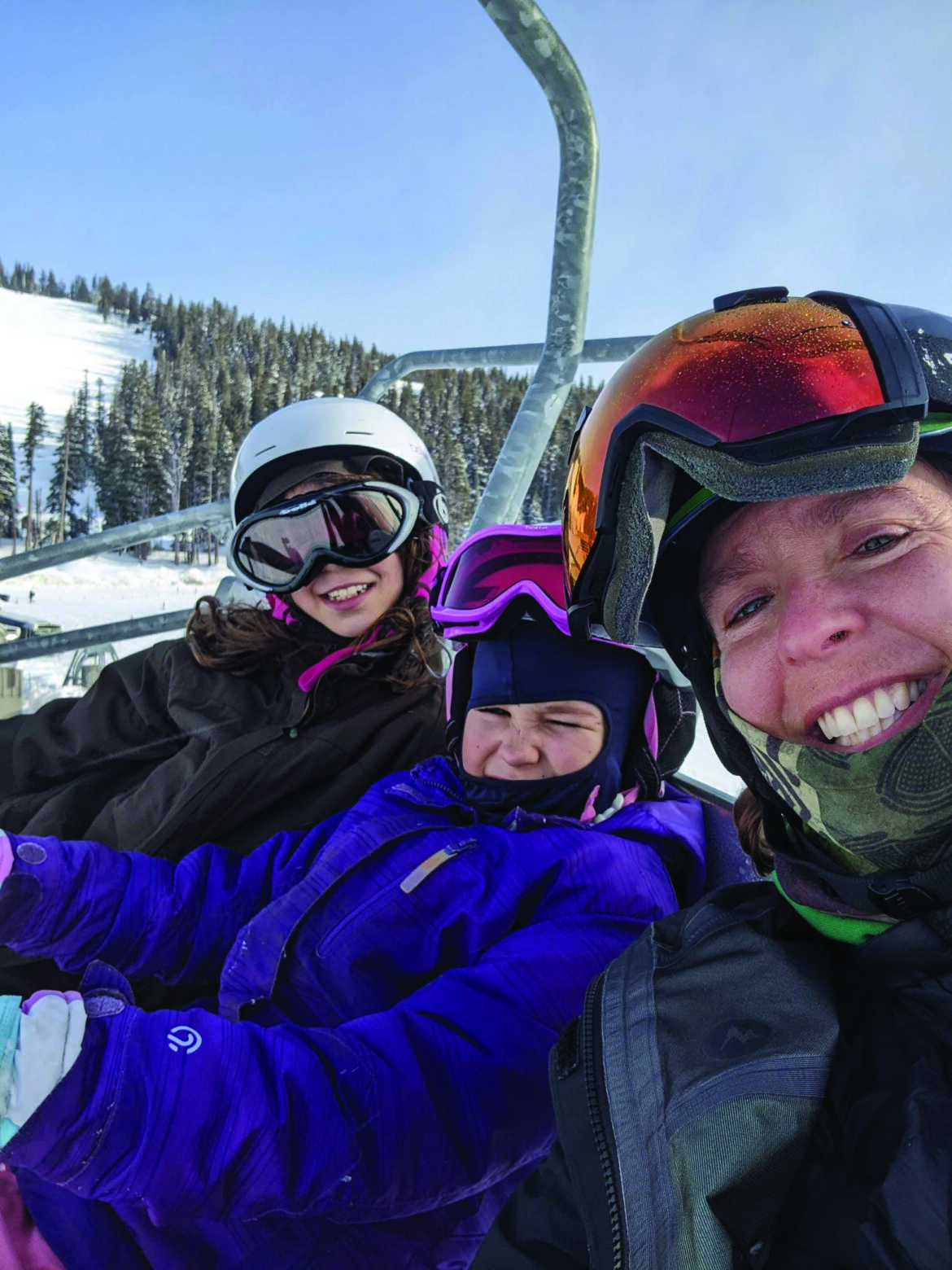
Three years ago, she and her wife decided to put down roots in the Gorge, close to her family—especially her young nieces. “I taught them how to ski and took them rafting,” she said proudly. Life felt full, joyful, and steady.
Until everything changed.
Not long after the move, Tiana discovered a lump in her breast. At first, she brushed it off, thinking it might be a bruise from roughhousing with her nieces. But it grew larger. With her mother’s history of breast and ovarian cancer, and her own BRCA1 genetic mutation, she knew she couldn’t ignore it. “I’d tested regularly, worked with doctors, and thought I was staying ahead of it,” she said. “But even with testing, breast cancer still snuck up on me. By the time I knew it, I had stage three.”
The diagnosis set off a whirlwind of treatment. She endured six months of chemotherapy, then underwent a double mastectomy and a hysterectomy. “I had large breasts, so being flat-chested allowed more freedom,” she said candidly. “But my wardrobe, no hair, and no boobs make me look like a 12-year-old boy. It seems to catch some people off guard.”
Radiation came next. The treatments were grueling, but there were moments of hope. “After chemo, I had a complete result—there was no cancer in my body. It felt like a win,” she said.
That win was short-lived. Weeks later, her balance began to falter. Typing felt clumsy. Headaches arrived, then intensified. “I chalked it up to being deconditioned after bed rest,” she said. Within days, she could hardly walk.
At the ER, scans revealed three large brain tumors. “The breast cancer had crossed the blood-brain barrier,” she said quietly. Surgeons removed two tumors, but the third was inoperable. More radiation followed. “I was pretty much bedridden for a year and a half,” she recalled. “Chemo and surgeries just took everything out of me.”
Now 44, Tiana lives with a terminal diagnosis. Traditional chemo can’t treat her brain tumor, but a PARP inhibitor slows its growth. Every three months, she undergoes scans and adjusts treatment as needed. Through it all, she’s grateful for her care team. “I had an all-women medical team, and they were absolutely amazing,” she said.
Life now looks very different. “I have about 30% of the battery I used to,” she explained. “I can still be active, but I must be really mindful. If I play golf, I take a cart. If I play tennis, I only play for an hour and keep it mellow.”
Emotionally, the diagnosis hit hard. Group therapy became a lifeline. “I joined a group for adults with advanced cancer—basically, everyone is terminal,” she said. “It helps to talk to people who can really empathize. We even laugh about the same morbid stuff. Nobody else can laugh with you like that.” She also found community in a young adult cancer group, which reminded her she wasn’t alone in her fears or her fight.
Her wife has been by her side through it all, sitting with her in chemo rooms, attending every appointment, and, last fall, marrying her in an intimate family ceremony. “We knew time was precious, so we didn’t wait any longer,” Tiana said.
She was introduced to Pink Lemonade Project by her medical team, and they became a part of her story. “I have been able to join education events, meet new people, be a part of cool projects, and even received financial assistance,” she said. “I try to take every opportunity possible to be engaged with my new community.”
Though her energy is limited, Tiana remains deeply connected to her nieces. “I can’t outlast them on the mountain anymore,” she said with a smile. “But we still go rafting together every year. I just hand off the heavy lifting and advise the boat.”
Looking back, Tiana sees both the devastation and the unexpected gifts of her journey. “Through all the treatments, there are things that are horrible—but there are also wonderful things you wouldn’t think of,” she reflected. “I’ve learned to enjoy the little things, not get too wrapped up in the what-ifs.” Life is short.